
Blog
What Factors Change Driveway Paving Prices Locally
Introduction
Two neighbors on the same street can repave their driveways in the same month—and end up with completely different quotes. One pays a few thousand dollars. The other pays nearly double.
Why?
Driveway paving isn’t priced like a flat, one-size-fits-all service. Costs shift based on your property layout, soil conditions, drainage, material choices, and even local weather patterns.
If you’re planning asphalt work around Seekonk, understanding these variables ahead of time helps you budget realistically and avoid surprises. This guide walks through the real-world factors that change driveway paving prices, how each one affects your estimate, and what you can control to keep costs reasonable.
How Driveway Paving Pricing Actually Works
Before looking at specific factors, it helps to understand how contractors calculate pricing in general.
Most driveway projects are based on:
Square footage of the surface
Depth and thickness of materials
Site preparation required
Labor and equipment time
Material costs
From there, adjustments are made depending on the site’s complexity. A simple, flat driveway with stable soil costs much less per square foot than a steep or poorly drained property that needs extra prep.
That’s why two driveways that look similar at first glance may have very different totals.
The Biggest Local Factors That Change Your Price
Instead of a long generic list, let’s break pricing down by what actually happens on-site. Each of the following conditions adds time, materials, or specialized work—and that’s where costs increase.
Driveway size and layout
This is the most obvious factor.
A small single-car driveway may only be 400–600 square feet, while larger homes can exceed 2,000 square feet.
More surface area means:
More asphalt
More base material
More labor
Longer equipment time
However, larger projects often cost less per square foot because crews work more efficiently.
Simple rectangular layouts are cheaper. Curves, tight corners, or multiple parking pads require more cutting and finishing, which increases labor.
Thickness of the base layer
The base beneath your asphalt matters just as much as the top surface.
If the existing base is solid and stable, contractors can often reuse it with minor grading. That keeps costs down.
If the base is weak or failing, crews may need to:
Excavate deeper
Add fresh gravel
Compact multiple layers
This adds material and machine time, which can significantly raise the price.
A stronger base costs more upfront but usually saves money long term by preventing cracks and sinking.
Excavation and site preparation
Preparation is where many price differences happen.
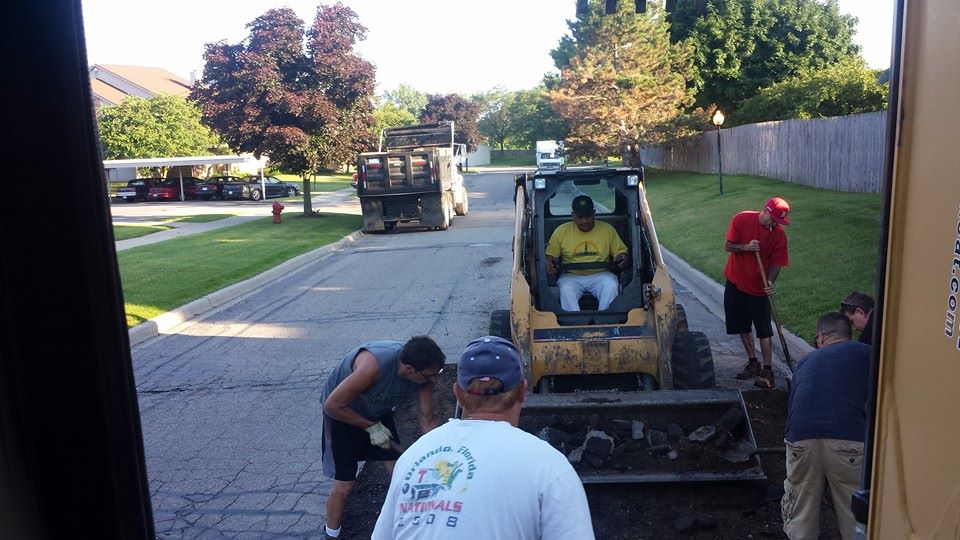
Some driveways only need light grading. Others require full removal of old asphalt, tree roots, or unstable soil.
Common prep work includes:
Demolition and haul-away
Excavation
Regrading
Soil stabilization
Compaction
If heavy equipment has limited access or the property is tight, work slows down and labor increases.
Prep work is invisible once finished, but it’s often one of the biggest portions of the bill.
Drainage and water management
Water is asphalt’s biggest enemy.
If your driveway holds water or slopes toward the home or garage, contractors may recommend correcting drainage before paving.
This might involve:
Re-sloping the surface
Installing drains
Adding catch basins
Improving runoff paths
These upgrades add cost but protect your investment. Without proper drainage, even a new driveway can crack or deteriorate quickly.
In areas like Seekonk that experience freeze-thaw cycles, drainage problems become even more expensive if ignored.
Existing driveway condition
Replacing an old driveway is different from installing a brand-new one.
Here’s how conditions affect cost:
If the old asphalt is thin or badly cracked, it must be fully removed.
If the base has settled or sunk, deeper reconstruction is required.
If the surface is still structurally sound, an overlay may be possible, which is cheaper.
The worse the condition, the more labor and materials are needed.
Slope and terrain
Flat driveways are straightforward.
Steep or uneven terrain changes everything.
Sloped areas require:
Extra grading
More compaction
Careful asphalt placement
Sometimes thicker material
Crews also work slower on hills for safety reasons, which increases labor time.
If your property sits on a hill or has elevation changes, expect higher pricing compared to flat lots.
Asphalt material and finish choices
Not all asphalt mixes are the same.
Standard residential mixes are cost-effective and durable. Heavier-duty mixes cost more but last longer under high traffic.
Additional upgrades may include:
Thicker asphalt layers
Reinforced edges
Decorative borders
Sealcoating
Line striping
Each enhancement adds to the total, depending on your goals.
Typical Driveway Paving Cost Ranges in Seekonk MA
While every home is different, most projects in the area fall within these general ranges.
These estimates vary based on the factors above, but they give homeowners a starting point for budgeting.
A Simple Way to Estimate Your Own Budget
If you want a rough idea before calling a contractor, try this quick method.
Step 1: Measure your driveway
Multiply length by width to get square footage.
Step 2: Apply an average range
Residential asphalt often falls between $4 and $8 per square foot depending on complexity.
Step 3: Add contingency
Include an extra 10–20% for prep work or drainage improvements.
This won’t replace a professional estimate, but it helps you set realistic expectations.
When Paying More Actually Saves Money
Cheapest isn’t always best when it comes to asphalt.
Investing in:
Proper base thickness
Good drainage
Quality materials
Professional installation
can add years to the life of your driveway.
A slightly higher upfront price often prevents premature cracking, sinking, and repeated repairs later.
In many cases, homeowners who cut corners end up paying twice.
FAQs About Driveway Paving Prices
Why do quotes vary between contractors?
Different companies may recommend different prep methods, materials, or thicknesses. Always compare scope, not just price.
Is asphalt cheaper than concrete?
Yes. Asphalt generally costs less upfront and is quicker to install, making it popular for residential driveways.
How long does a new driveway last?
With proper maintenance, asphalt typically lasts 15–20 years or more.
Does season affect price?
Spring and summer are busy seasons. Scheduling early or during shoulder months can sometimes reduce wait times.
Can small repairs delay full replacement?
Yes. Crack sealing and patching can extend lifespan, but once structural damage spreads, replacement becomes more cost-effective.
Conclusion
Driveway paving prices change because every property is different. Size, soil stability, drainage, terrain, and materials all play a role in the final number. Understanding these factors helps you plan smarter, avoid unexpected costs, and invest in work that lasts.
For homeowners in Seekonk, working with a local contractor familiar with regional weather and ground conditions can make a noticeable difference in durability and performance. Teams like All-Phase Asphalt Inc regularly evaluate driveways and recommend practical solutions that balance cost with long-term value.
A quick on-site assessment is often the easiest way to turn uncertainty into a clear, accurate budget.

Our Services
Helpful Links
License: RI 13328
© 2025 All Rights Reserved | All-Phase Asphalt Inc